

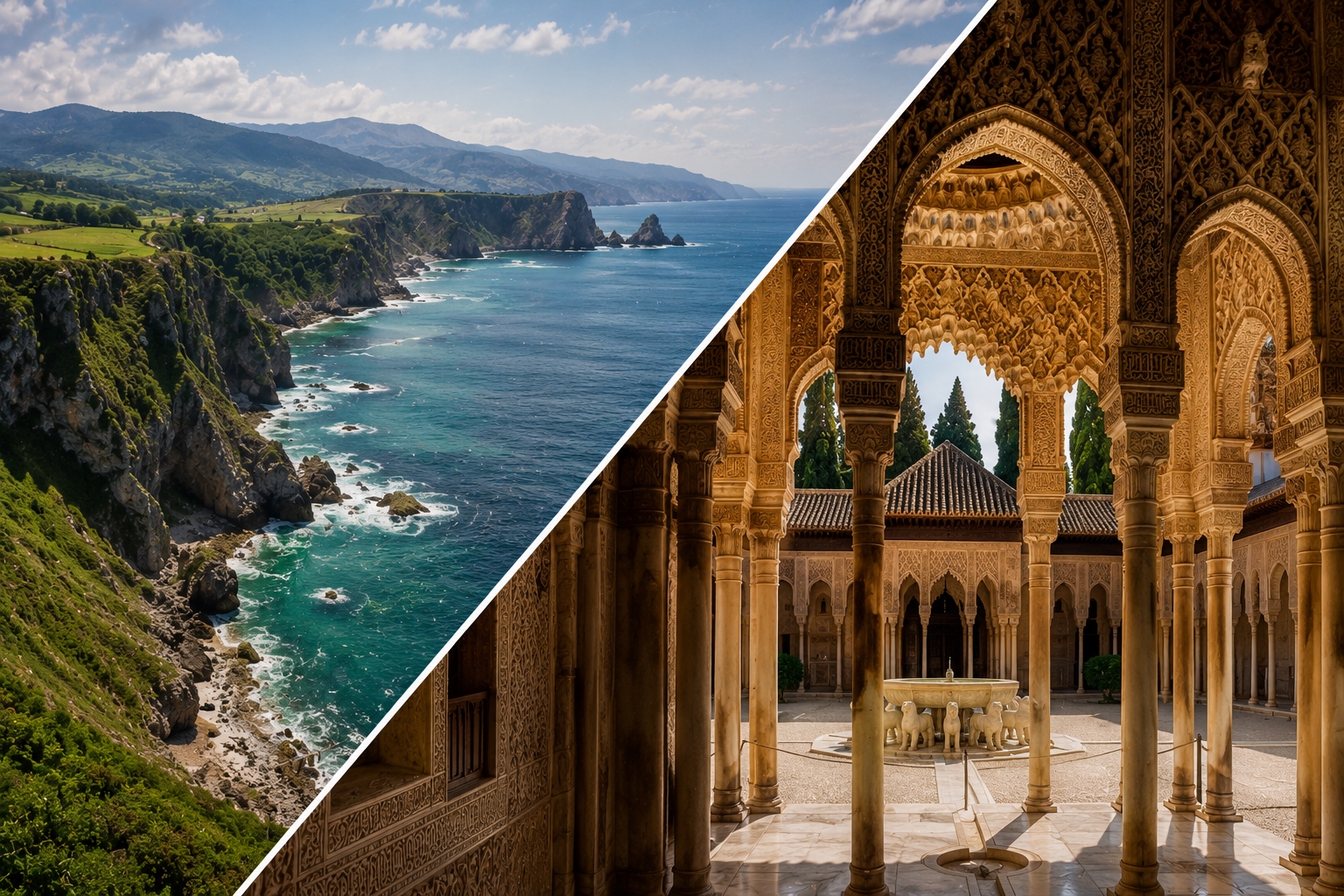
01 Oct Northern Spain vs Southern Spain: A Guide to Choosing Your Ideal Itinerary
Spain’s extraordinary diversity means every region offers something completely different. Yet nowhere is the contrast more striking than between its north and south.
In the north, dramatic Atlantic coastlines, lush mountain landscapes and distinctive local cultures set the scene for a gloriously green escape at a slower pace. In the south, sun-drenched cities, Moorish monuments, flamenco and long evenings over tapas combine to create the Spain many travellers picture first.
When considering northern Spain vs southern Spain, the right choice depends on your preferred pace, interests and time of year – and whether you have enough time to experience both.
Northern Spain vs Southern Spain at a Glance
Comparing northern vs southern Spain is a little like comparing apples and oranges. Neither is better, but each offers a distinctly different experience.
Northern Spain is defined by verdant Atlantic scenery, wild coastlines and proud regional identities, from the Basque Country to Galicia. Its cities, villages and countryside invite you to slow down, combining coastal walks and characterful historic towns with exceptional food and wine.
Southern Spain is as warm and passionate as the sun that beats overhead for much of the year. Intricate Moorish architecture, whitewashed villages and tapas bars create an atmosphere that’s vibrant, colourful and steeped in history, while flamenco and dancing horses bring a theatrical flair.
From climate and landscapes to architecture, culture and gastronomy, the following comparisons will help you decide whether north vs south Spain is the right choice for your trip.
North Spain vs South Spain: An In-depth Comparison
Climate
Northern Spain’s Atlantic location brings a temperate climate with milder summers and more rainfall creating verdant valleys and lush forests. It’s a great choice if you prefer cooler temperatures, particularly if you’re planning coastal walks, outdoor activities and sightseeing without intense heat.
Southern Spain can be intensely hot, with its Mediterranean climate bringing long, dry, sunny days for much of the year. Spring, autumn and winter are especially rewarding for exploring Andalucia’s cities, while summer is best shaped around early starts, relaxed afternoons and long evenings outdoors.
Landscape & Beaches
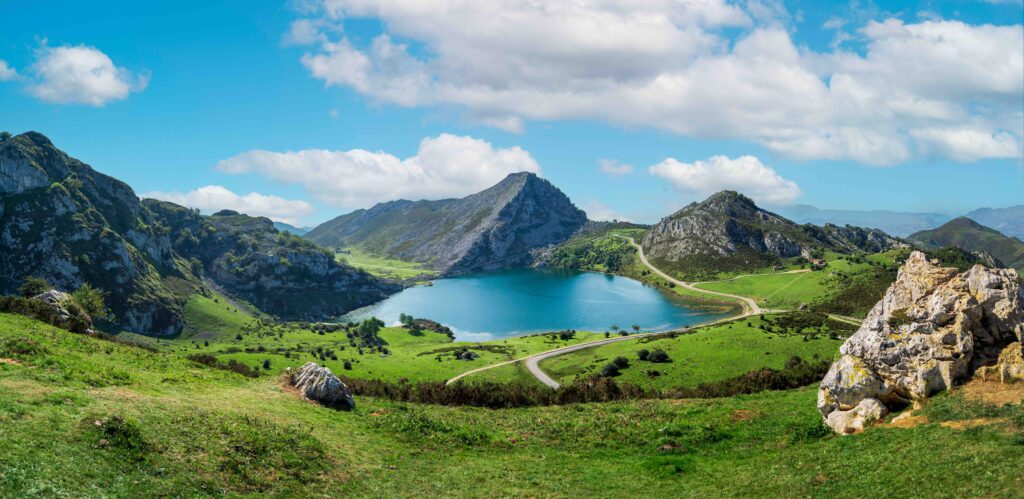
From the Picos de Europa mountain range to the sweeping Bay of Biscay, northern Spain is a patchwork of cliff-crashing waves, wild beaches and moody landscapes, punctuated by charming fishing villages and elegant coastal towns. Aptly referred to as ‘Green Spain’, it’s a paradise for nature lovers and outdoor enthusiasts, its emerald hills and Atlantic light lending the region a lush, almost Celtic character.
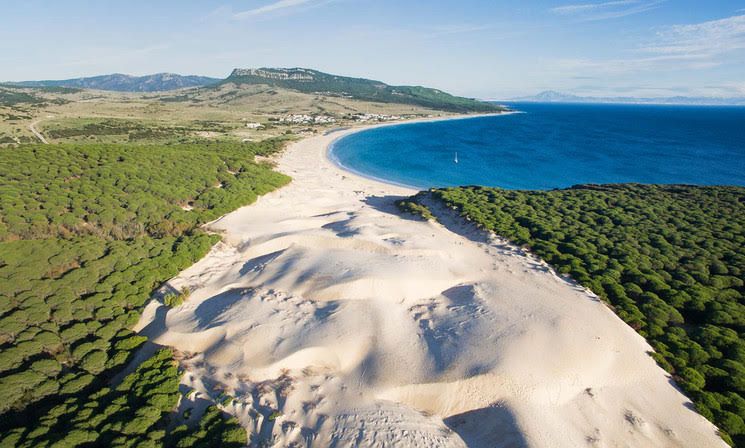
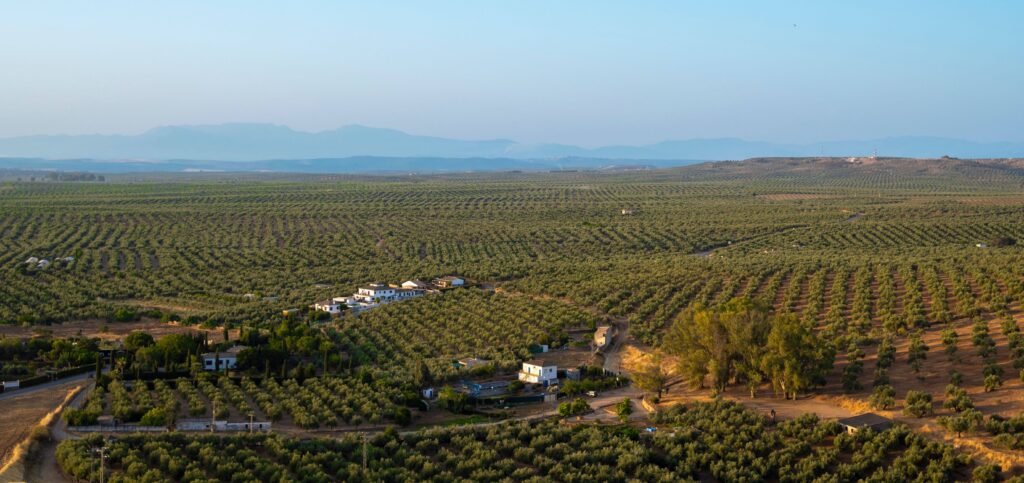
If the north is green, southern Spain is golden. Olive groves and vineyards roll towards high, rugged mountains, while whitewashed villages cling to arid hillsides. Its coastline shifts from the Atlantic shores of the Costa de la Luz to the Mediterranean beaches of the Costa del Sol, bringing long stretches of sunshine, warm seas and an easy rhythm of outdoor life. It’s a natural choice for sunseekers, but its varied landscapes also reward travellers who want to balance beach time with mountain walks, historic towns and rural escapes.
Architecture & Historic Cities
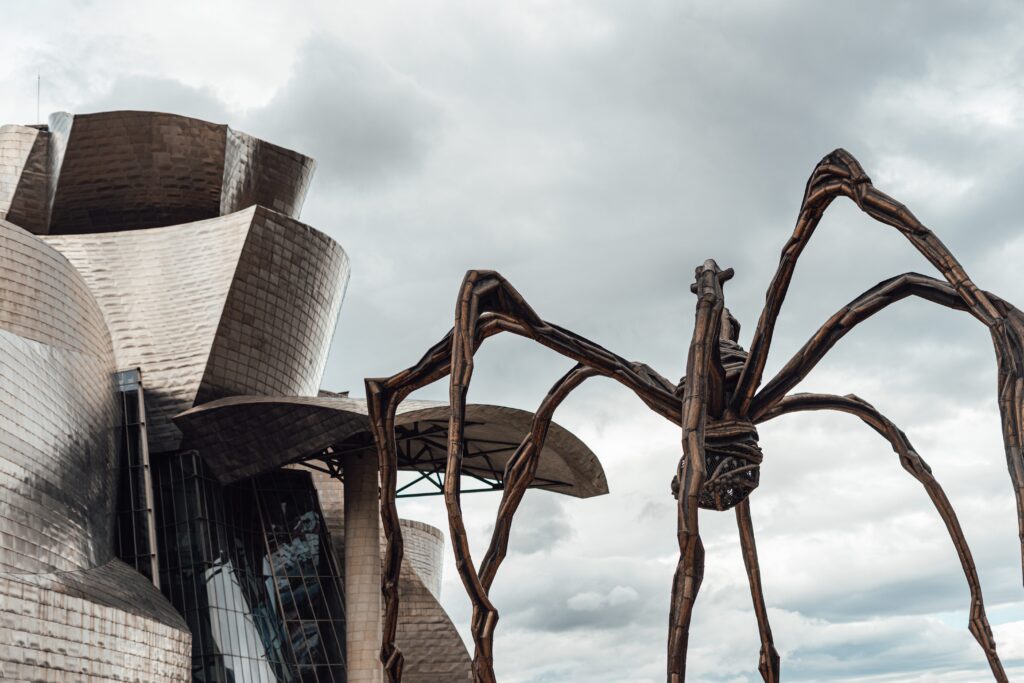
Northern Spain blends old-world character with a confident contemporary edge. Gothic cathedrals and Romanesque churches abound, with Galicia’s Cathedral of Santiago de Compostela – the endpoint of the Camino de Santiago pilgrimage – a masterpiece of medieval grandeur. In San Sebastián, Belle Époque buildings line the elegant seafront, while Bilbao pairs its industrial past with daring modern architecture, most notably the curvaceous Guggenheim Museum. Beyond the cities, medieval villages and traditional mountain stone houses seem largely untouched by time.
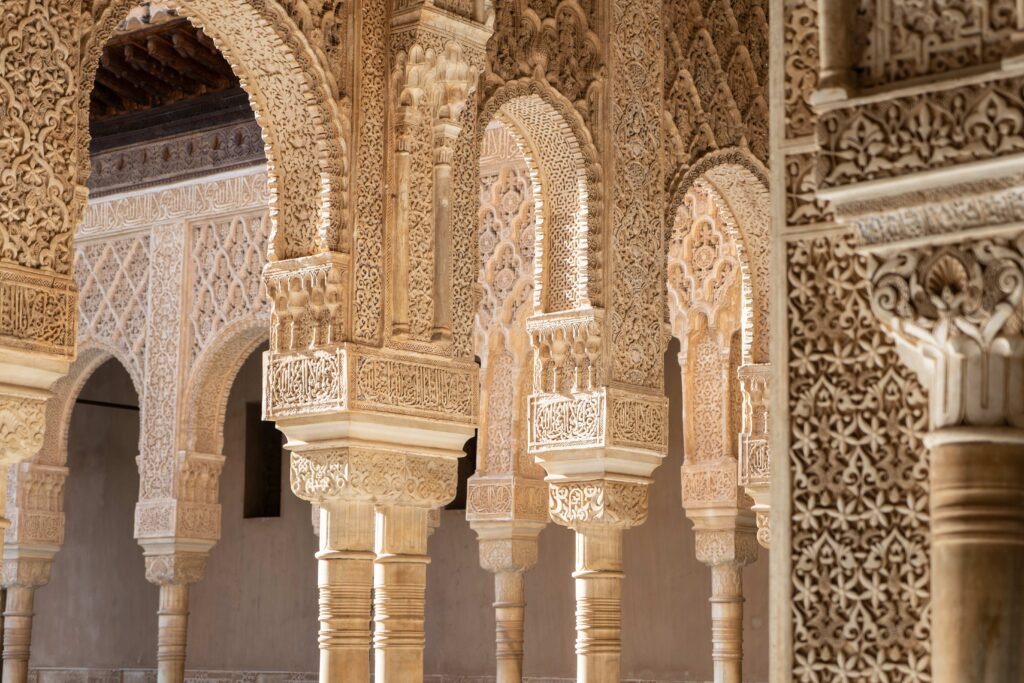
Southern Spain reveals its past at every turn. Roman towns like Baelo Claudia recall the region’s earliest chapters, while its Moorish legacy lives on in geometric tilework, ornate arches and fountain-filled courtyards. Granada’s Alhambra is a pinnacle of Islamic art and architecture, while Seville’s Alcázar palace blends Islamic and Christian influences in a remarkable display of mudejar craftsmanship. In Córdoba, the Mezquita-Cathedral brings mosque and cathedral together under one roof. Elsewhere, the UNESCO-listed cites of Baeza and Úbeda showcase Andalucia’s Renaissance and Baroque heritage.

Culture & Traditions
Northern Spain is shaped by proud regional identities, creating a rich cultural patchwork. In the Basque Country, Euskera – one of Europe’s oldest languages, with no known linguistic relatives – remains part of daily life, alongside lively festivals and fierce pride in local heritage. Galicia has its own language, Gallego, alongside a strong Celtic-influenced musical heritage. Asturias is known for cider houses, bagpipes and mountain traditions, while Cantabria’s fishing villages and rural festivals reflect its enduring connection to coast and countryside.
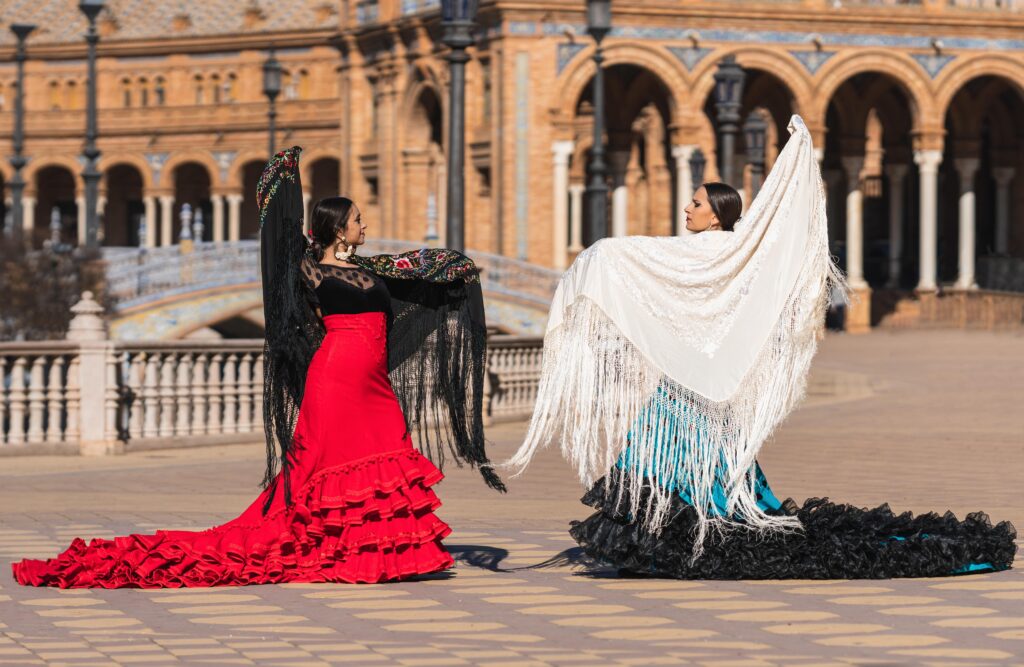
Southern Spain is equally rich in tradition, with Andalucia’s customs shaping many travellers’ idea of Spain. Flamenco is rooted in the region, its raw emotion and impassioned music and dance still central to local identity, while the solemn processions of Semana Santa bring cities and towns to a standstill each spring. Colourful ferias fill the calendar with music, dance and celebration, and tapas culture turns evenings into a sociable ritual of shared plates and lively conversation. Across the region, the Moorish legacy endures in its music, crafts and relaxed rhythm of outdoor life.


Food & Wine
Spanish gastronomy is beloved worldwide, but the flavours of north vs south Spain are worlds apart. Both offer exceptional regional produce, deeply rooted culinary traditions and world-renowned wines. Yet each has its own distinct culinary character.
For many travellers, the food alone is reason enough to choose northern Spain. In the Basque Country, artfully prepared pintxos range from simple bar snacks to elaborate gourmet bites, while San Sebastián’s Michelin-starred restaurants have made it one of Europe’s great culinary destinations. Fresh seafood reigns along the coast, from Galician octopus to Cantabrian anchovies, while Asturias offers hearty stews and tangy apple cider. Wine lovers can sample crisp Basque txakoli and the celebrated reds of nearby Rioja.
Mediterranean and Moorish influences shaped the bold, sun-soaked flavours of southern Spain. Tapas culture encourages leisurely evenings spent moving between bars, sharing small plates of jamón ibérico, fried fish, local cheeses and dishes enriched with exceptional Andalucian olive oil. Cold soups and warming stews are regional staples, while seafood shines along the coast. Sherry remains the classic accompaniment, though boutique whites, reds and sparkling wines are increasingly worth seeking out.



Northern vs Southern Spain: Which Should You Choose?
Choosing between northern Spain vs southern Spain can be tricky. Both offer distinct, unforgettable experiences and both are unmistakably Spanish – in their own way.
Northern Spain has a more refined, understated feel. It’s a great choice if you’re drawn to cooler summer temperatures, lush green landscapes, elegant coastal cities and wild, atmospheric beaches. Nature lovers and keen walkers will appreciate its varied scenery, while food and wine enthusiasts can sample some of the country’s finest flavours. Its coastline is made for road trips, and its quieter towns and lesser-known sights invite a slower pace of travel – perfect for those who love to get off the beaten track or return visitors seeking a different side of Spain.
Southern Spain offers a lively, sensory introduction to the country, bringing many of its most recognisable images to life – ornate Moorish architecture, landmark-filled cities, the raw passion of flamenco and balmy evenings spent hopping between tapas bars. It’s a natural fit for travellers who love history, architecture and culture, while sunseekers will be drawn to golden beaches and laid-back beach bars. It’s easy to be swept up in the region’s infectious energy and joy for life, yet its rural corners and hidden gems offer a quieter side to discover.
There is, of course, a third option: why choose at all? With two weeks or more, a tailor-made itinerary can combine the north’s culinary and coastal appeal with the south’s historic cities and sun-drenched landscapes. From the calm, verdant scenery of ‘Green Spain’ to Andalucia’s lively festivals and passionate spirit, a multi-region trip reveals the extraordinary breadth of the country in one unforgettable journey.
Explore Spain Your Way with Just Explore
Still deciding between northern Spain vs southern Spain? Just Explore’s experienced travel designers can help you choose the region and style of travel that best suits your interests, preferred pace and time of year.
Contact Just Explore to discuss your plans, join one of our intimate small group tours, or let us create a completely tailor-made itinerary around the Spain you want to discover.