
03 Nov Navigating Fes Medina: Morocco’s Oldest Car-Free City
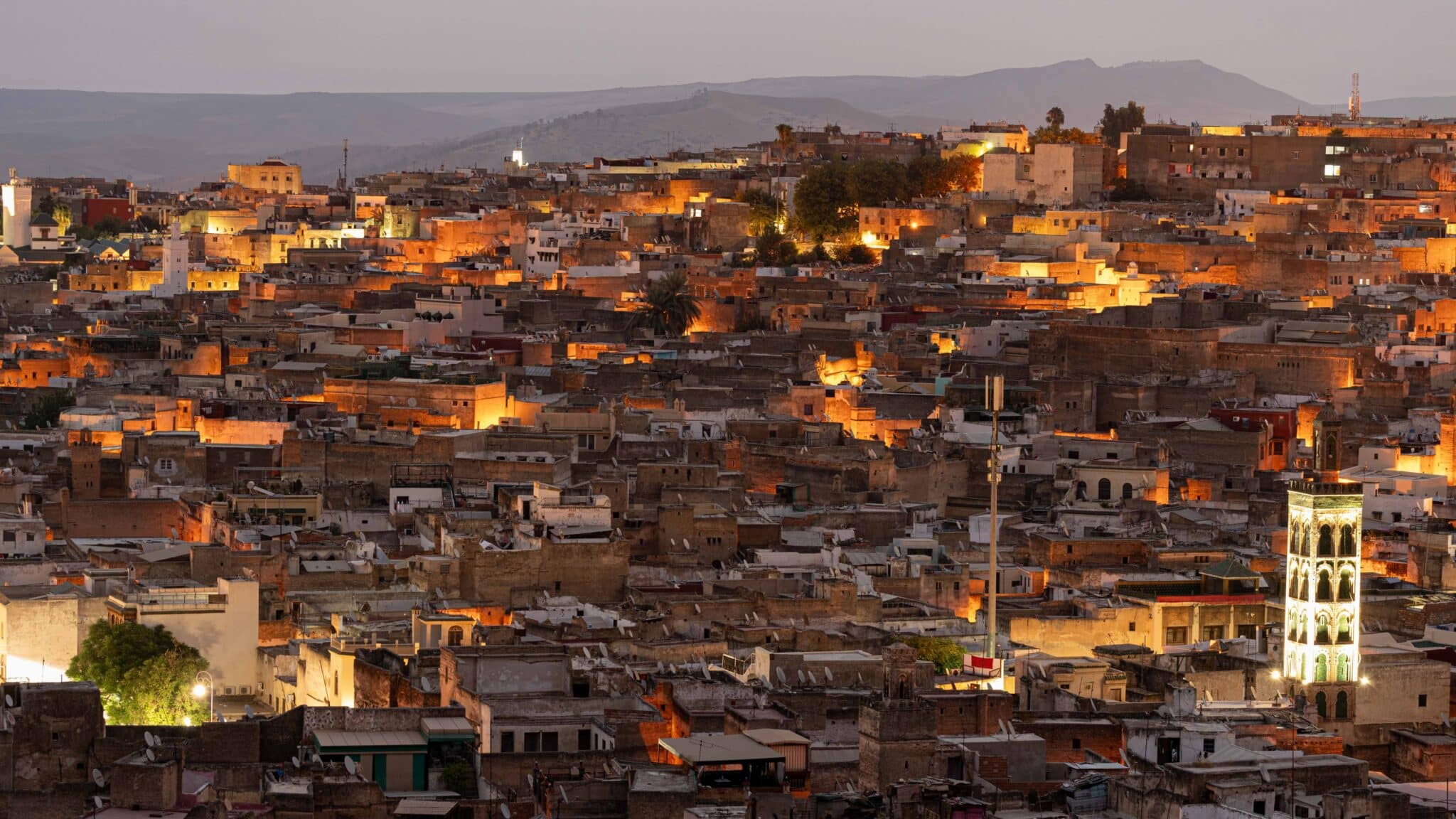
A warren of twisting lanes, soaring minarets and souks rich with colour and scent, Fes medina is an assault on the senses. One of the best-preserved historic cities in the Islamic world, its car-free streets are dotted with riads, fountains, mosques and madrasas dating back to the Middle Ages.
Yet amid its centuries-old monuments, Fes medina remains first and foremost a working neighbourhood, shaped by the rhythms of trade, religion and daily life. The air carries the heady aromas of bread and spices, while fresh mint tea wafts from open doorways. The call to prayer drifts above the sound of artisans hammering patterns into brass. Donkeys ferry produce between souks, jostling for space alongside visitors finding their bearings.
Exploring this medieval labyrinth is both exhilarating and, at first, a little intimidating. But amble through its winding lanes and uncertainty gives way to wonder, as everyday life in the medina unfolds around you.
Fes Medina, Morocco: History and Heritage
Fes, also spelled Fez, sits in north-central Morocco, between the Rif and Middle Atlas mountain ranges. Founded in 789 by Idris I, it’s the oldest of Morocco’s four imperial cities, alongside Meknes, Marrakesh and Rabat. The city served as Morocco’s capital at several points in its history and is now widely regarded as its cultural and spiritual heart.
The current city is made up of three distinct quarters:
- Fes el-Bali is the ancient walled city and the part most visitors refer to as Fes medina. Its estimated 9,000 lanes and alleyways lead past historic mosques, madrasas, souks and workshops, and are home to approximately 150,000 people.
- Fes el-Jdid is the later royal quarter, founded by the Marinid dynasty in 1276. It’s home to the Royal Palace and the historic mellah, an important focal point for exploring Morocco’s Jewish heritage.
- Ville Nouvelle developed during the French Protectorate. Its wide boulevards, international hotels and transport connections make it a useful base, while the older quarters retain much of the city’s historic atmosphere.
Of the three, it’s Fes el-Bali – the Fes medieval medina – that most vividly captures the imagination. Over the centuries, it flourished as a centre of trade, Islamic scholarship and religious life, particularly under the Marinids in the 13th and 14th centuries. Its mosques, madrasas, markets and fountains still reflect centuries of cultural exchange, while Al Quaraouiyine University has helped define Fes’s reputation as a city of learning since the 9th century.
That sense of continuity is also evident in the medina’s workshops, where metalworkers, leatherworkers, weavers and tilemakers still practise crafts shaped by centuries of knowledge and skill.
In 1981, the medina of Fes was inscribed as a UNESCO World Heritage Site, recognised for its remarkably intact historic fabric and enduring cultural life. The Fes medina UNESCO World Heritage Site encompasses both the ancient city of Fes el-Bali and the later royal quarter of Fes el-Jdid. Its value lies not only in individual monuments, but in a way of life that’s evolved over centuries without losing its connection to the past.
How to Navigate Fes Medina
Navigating Fes medina is a challenge, particularly as GPS is often unreliable amid the tangle of narrow streets and alleyways. While getting lost is part of the experience – and part of the magic – we recommend a knowledgeable local guide for your first visit. They can help you find your bearings, bring the medina’s history and landmarks to life, and leave you free to enjoy the experience.
If you’d prefer to explore independently, download an offline map, pop on some comfortable walking shoes, and begin at Bab Bou Jeloud. Known as the Blue Gate, its striking blue-and-green tilework marks one of the medina’s most recognisable entrances.
From here, begin on one of the main thoroughfares. Talaa Sghira and Talaa Kebira run through the medina’s commercial heart, passing shops, cafes and historic landmarks. Once you feel more confident, take a turn into the quieter side lanes where tiny shrines, traditional hammams and long-established workshops show a different side of the medina.
A few simple tips can make exploring easier:
- Carry water and cash – small notes and coins are useful for purchases and tips
- Respect local customs – dress modestly and ask before photographing people
- Allow plenty of time – the medina isn’t somewhere to rush between sights
- Be cautious of unsolicited offers of help – if you need directions, ask your riad, a shopkeeper or an official guide.
Unmissable Sights and Souks in Fes Old Medina, Morocco
History and heritage are on display throughout the medina of Fes, but a handful of landmark sites deserve a place on every first-time itinerary.
Al Quaraouiyine University and Mosque
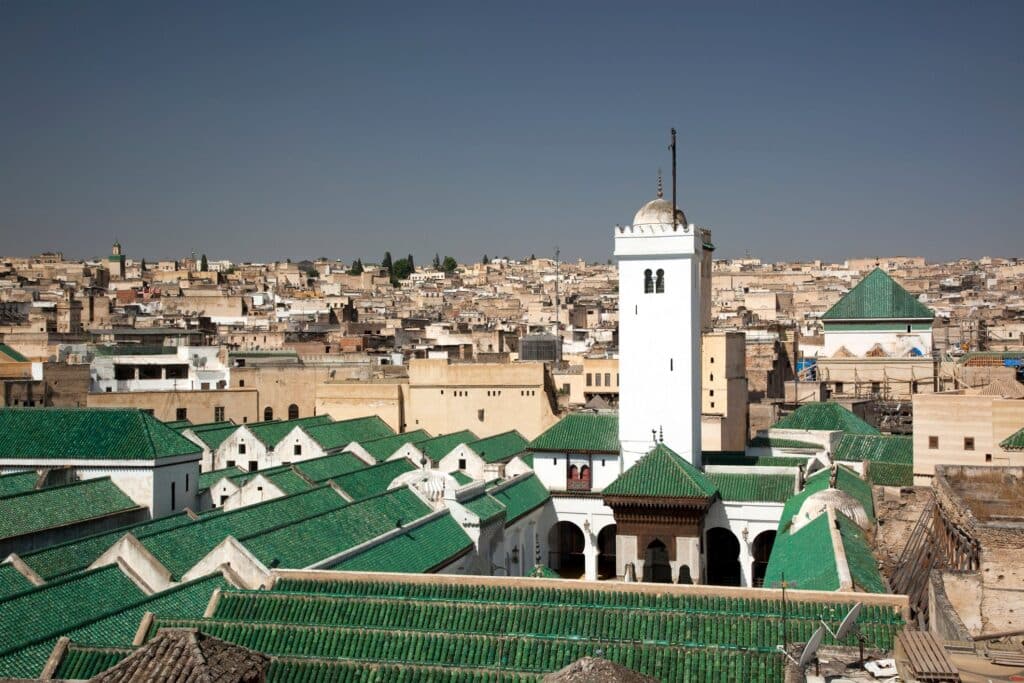
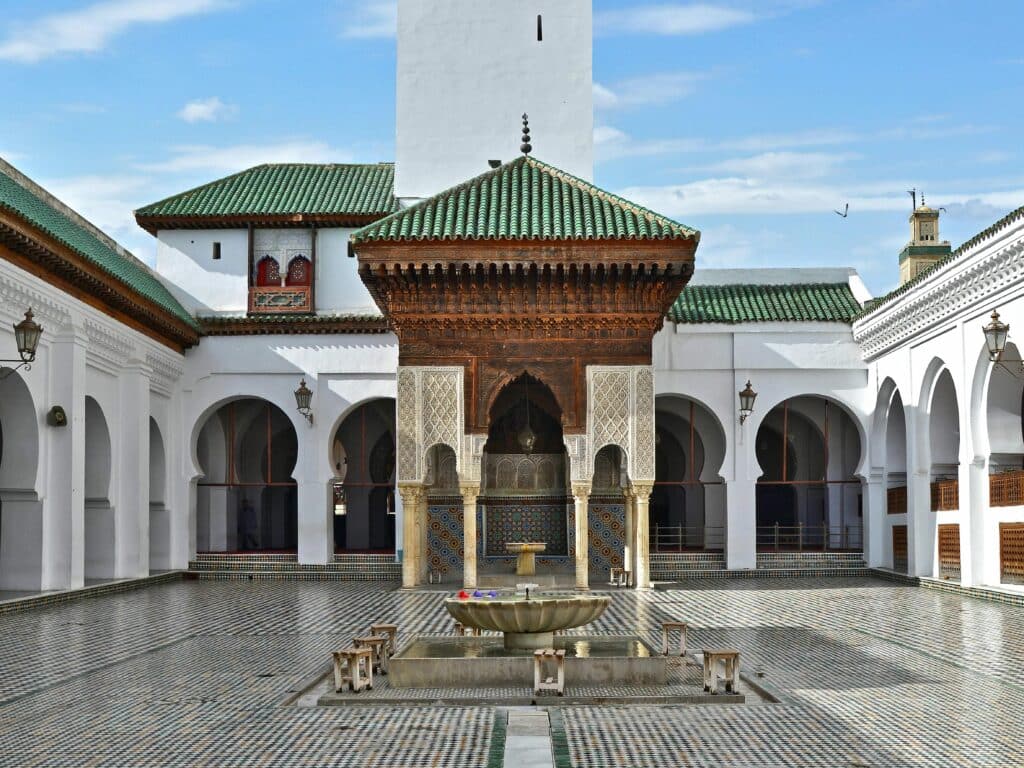
Widely recognised as the world’s oldest continuously operating university, Al Quaraouiyine was founded as a mosque by Fatima al-Fihriya in 859. As an active place of worship, non-Muslims can’t enter the mosque, but can admire its carved doorways, green-tiled roofs and distinctive minaret from the surrounding lanes.
The Madrasas of Al-Attarine and Bou Inania
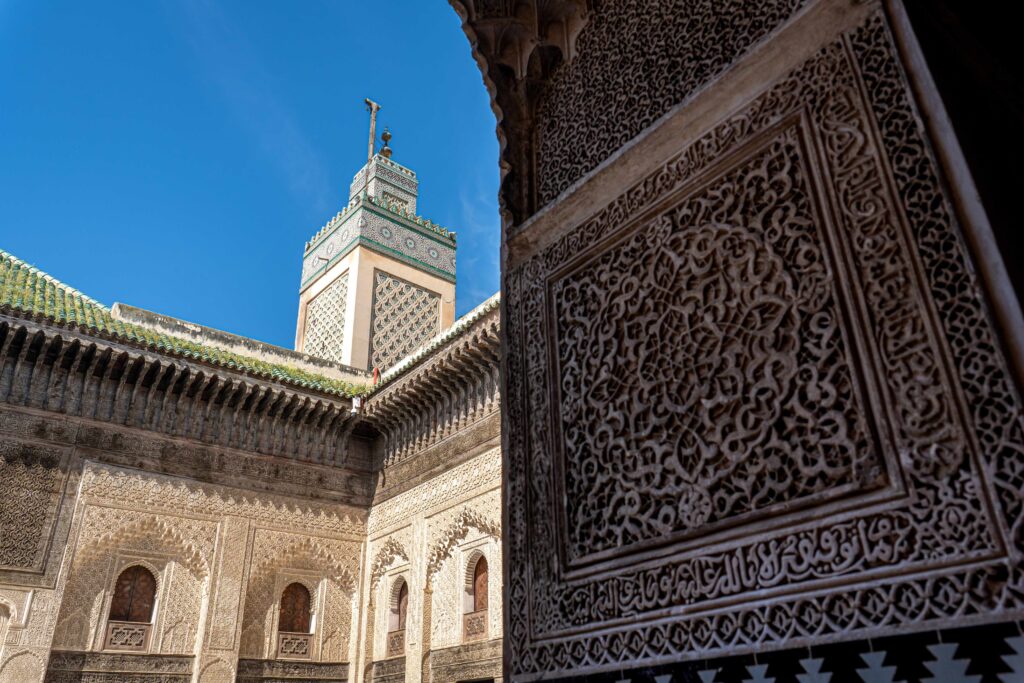
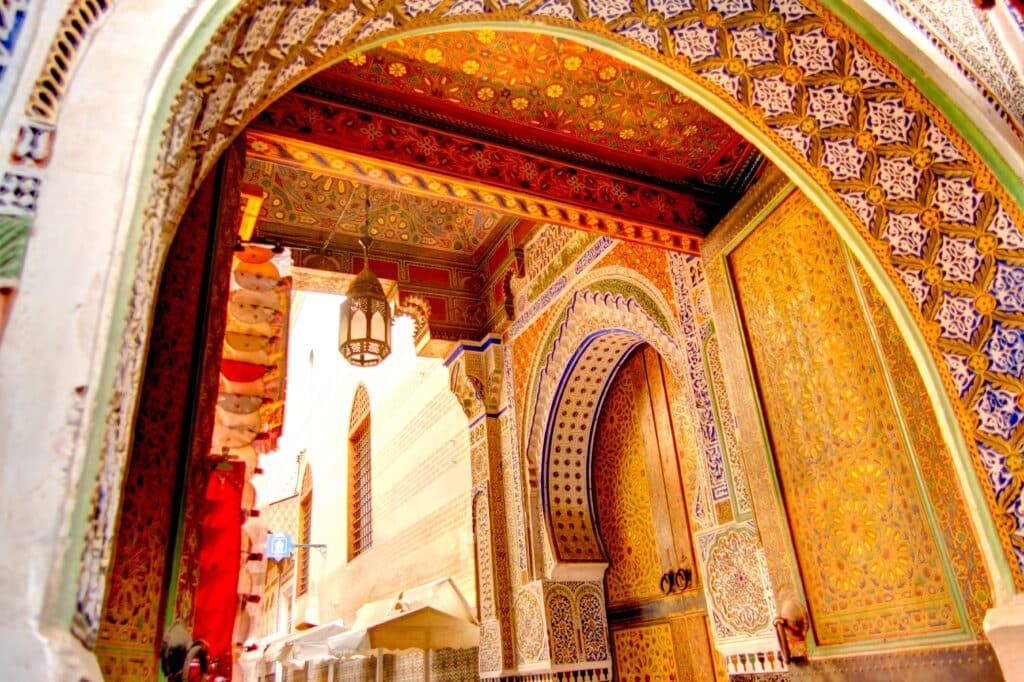
Among Fes’s historic madrasas (Islamic schools), Al-Attarine and Bou Inania stand out for their exquisite architectural detail. Dating from the 14th century, both combine zellige tilework, carved plaster and intricate cedarwood in a remarkable display of art, faith and craftsmanship.
Chouara Tannery
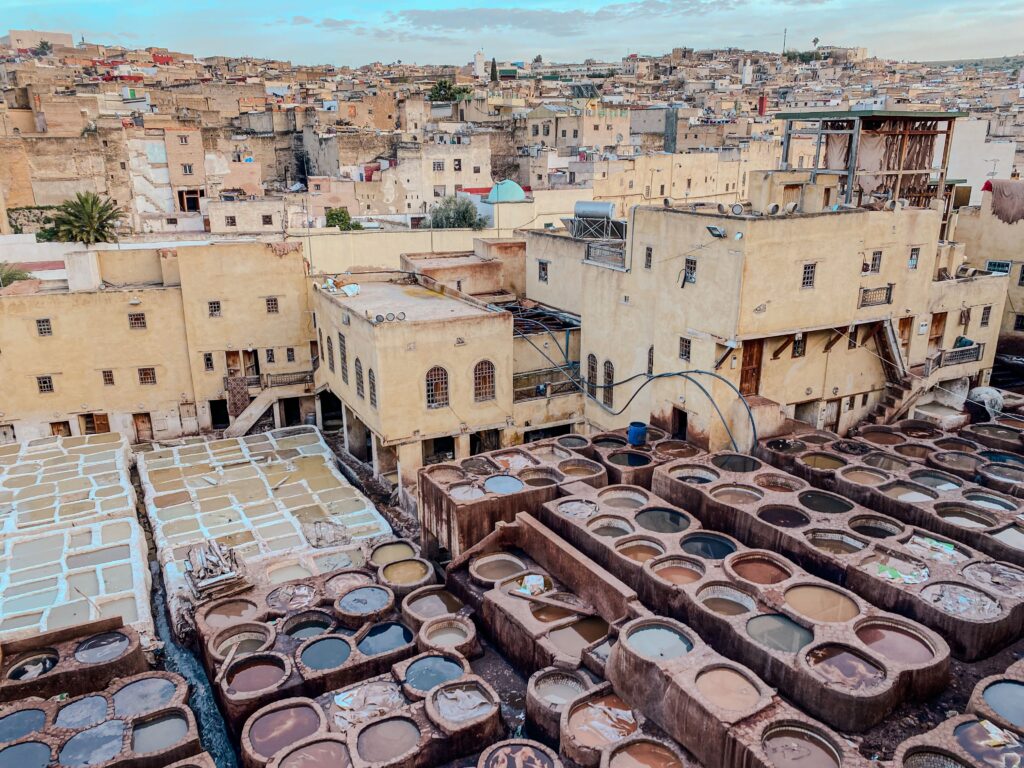
Perhaps the medina’s most iconic sight, Chouara Tannery is a patchwork of circular stone vats where hides are soaked, treated and dyed using techniques dating back centuries. Climb to a surrounding leather shop terrace for a visual spectacle – and be prepared for a pungent smell and the inevitable invitation to purchase leather goods afterwards.
Souks, Workshops and the Nejjarine Museum
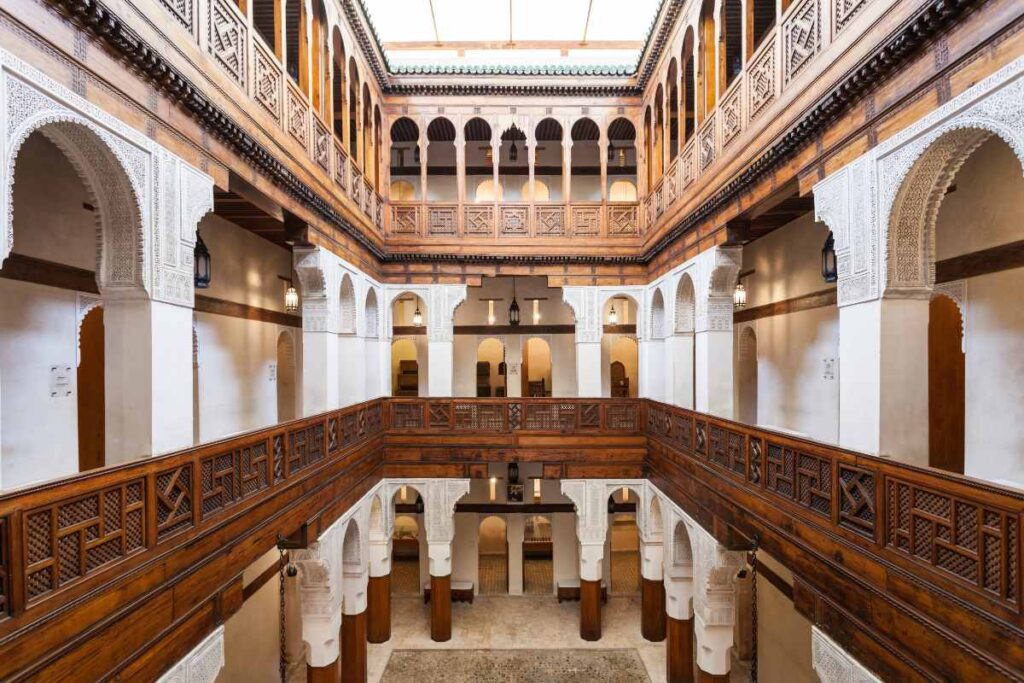
The souks of Fes are as much for watching as shopping, offering traditional Moroccan crafts from brassware, ceramics and spices to woodwork and clothing. Each specialises in particular goods, with workshops where craftspeople still practise their trade. Seek out Seffarine Square to watch brass and copper workers at their benches before visiting the Nejjarine Museum of Wooden Arts and Crafts.
The Marinid Tombs
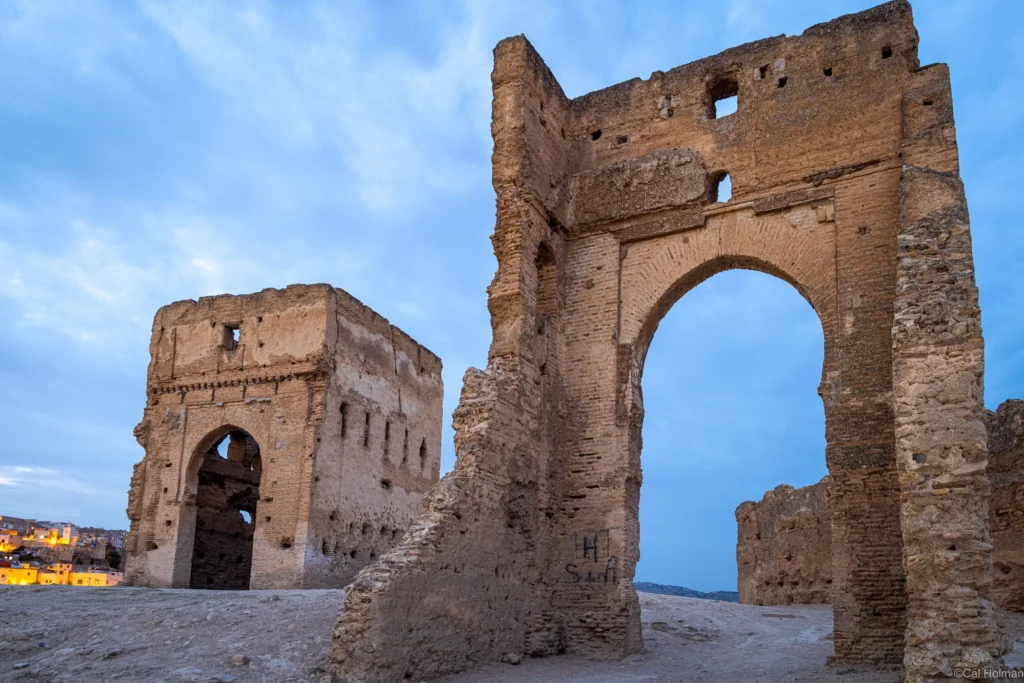
On the hillside above Fes el-Bali, the ruined Marinid tombs offer one of the best views over the city. They’re best experienced at sunset on a calm evening, when a dusky pink settles over the rooftops and minarets and the call to prayer echoes across the city. Check current access arrangements before making the journey.
Jnan Sbil Gardens
After a few hours in the medina’s vibrant lanes, take a break in Jnan Sbil Gardens. With herb gardens, tall palms, fountains and shaded paths, this landscaped park provides a peaceful pause from the chaos – and welcome relief from the north African sun.
Fes Medina Restaurants and Local Flavours
Widely considered Morocco’s culinary capital, Fes medina offers everything from street-food snacks and simple local cafes to elegant riad restaurants. Its food draws on North African, Arab, Moorish, Turkish and French influences, creating a cuisine shaped by fragrant spices, preserved citrus, olives, nuts and sweet-and-savoury combinations.
Among the specialities to look out for are:
- Pastilla: Fes’s signature sweet-and-savoury pastry, traditionally filled with pigeon, almonds, cinnamon and sugar.
- Tagines: slow-cooked stews combining meat, poultry or fish with spices, nuts and dried fruit.
- Zaalouk: a smoky aubergine and tomato salad made with garlic and spices.
- Couscous: the staple grain, often served with soups and stews or eaten simply with herbs and olive oil.
- Harira: a hearty tomato, lentil and chickpea soup. Traditionally served to break the fast during Ramadan, it’s now common year-round at street stalls.
- Moroccan sweets: honey, rose water, orange blossom water, citrus and almond all feature in the wide variety of sweets and pastries.
- Mint tea: sweet green tea with fresh mint, traditionally poured from a height and widely offered as a gesture of hospitality.
Many Fes medina restaurants are set within restored riads, where tiled courtyards and rooftop terraces provide an atmospheric setting for dinner. Alcohol isn’t widely served in the medina, so fresh juice and mint tea are the classic accompaniments. Wine, beer and cocktails are generally limited to licensed hotels, riads and a small number of restaurants.
We can arrange food tours and cooking classes that typically include a market visit, offering a hands-on introduction to the ingredients and techniques behind Fes’s signature dishes.
Discover Fes with Just Explore
Ready to lose yourself in Fes without losing your way? Our tailor-made tours to Morocco can include time in Fes, with a local guide unlock the stories, flavours and hidden corners of Fes medina.
If you prefer to travel with a small group, The Hidden Gems of Southern Spain, includes a day trip to Tangier, offering a taste of Morocco’s culture, cuisine and medina life. Discover the inspiration behind the route in our guide to southern Spain’s hidden gems.
Contact Just Explore to start planning your Moroccan adventure.