23 Jun 11 Perfectly Preserved Bastide Towns in Southwest France
From the Palace of Versailles and the châteaux of the Loire to Mont-Saint-Michel and Notre-Dame, France has no shortage of headline-grabbing monuments. But dotted across the country’s southwestern corner is a group of living monuments that offer an enchanting glimpse into daily life in France during the medieval era.
With their characteristic grid-like street plans and colonnaded central squares, bastide towns in France are attracting visitors keen to step back in time and experience their rich heritage and atmospheric charm. There may be as many as 500 bastides across the country, but the greatest concentration lies in the southwest, scattered throughout Nouvelle Aquitaine and Occitanie.
So what is a bastide town in France, and which are the best bastide towns to visit?
What Is a Bastide Town in France?
Bastide towns in France are planned medieval towns, most of them founded during the 13th and 14th centuries in the southwest. Many sit on hilltops or natural terraces, and together they form one of the largest clusters of well-preserved medieval townscapes in Europe.
French bastide towns were, in effect, medieval ‘new towns’. Instead of growing around a castle or monastery, bastides were created to organise trade, attract new settlers and secure sparsely populated frontier regions. That’s why you often find them on key land and river routes.
Medieval bastide towns were established by French and English rulers, local lords and religious orders, sometimes in partnership. Their aims varied, from concentrating communities and improving security to boosting trade revenues.
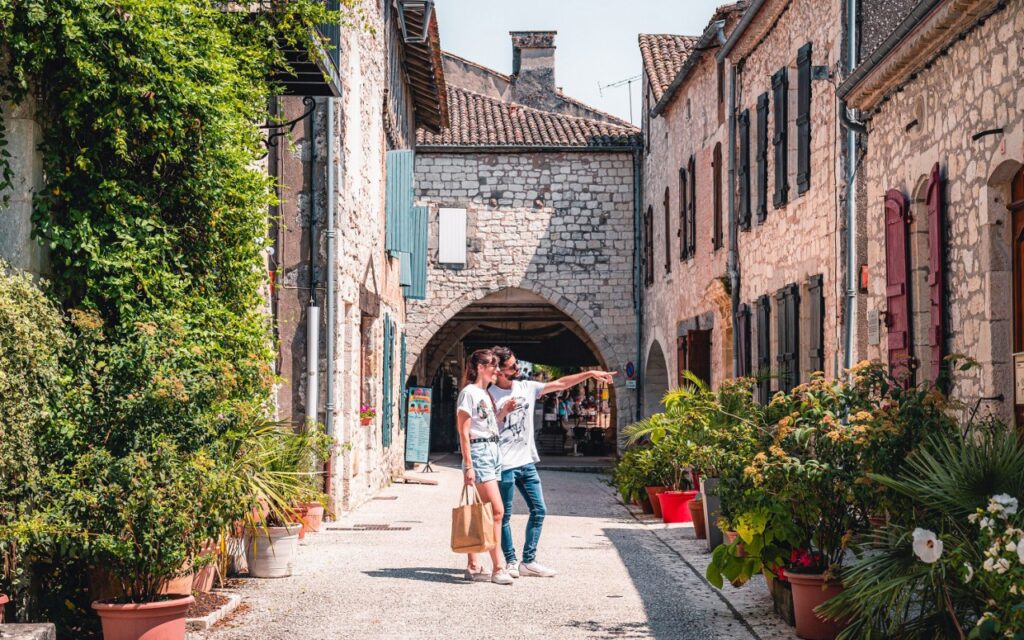
What unites them is a recognisable layout. Most bastides are built around a central marketplace, usually framed by arcades that shelter traders and cafes. Straight streets run out from the square in a roughly grid-like pattern, wide enough for carts to pass. Defensive walls and gateways were often added or reinforced at a later stage.
Today, many French bastide towns have evolved into lively small centres with weekly markets, while a number are listed among Les Plus Beaux Villages de France for their architectural and historic character.
11 of the Best Bastide Towns to Visit in France
With so many bastides to choose from, deciding which are the best bastide towns to visit in France is always a little subjective. For this guide, we’ve focused on places that are both beautifully preserved and easy to weave into a southwest France itinerary. That means classic bastide strongholds in the Dordogne and Lot-et-Garonne, as well as towns that pair naturally with Bordeaux and the French Basque country, where our France tailor-made trips are based.
Here are 11 of our favourite bastide towns in France.
1. Monpazier
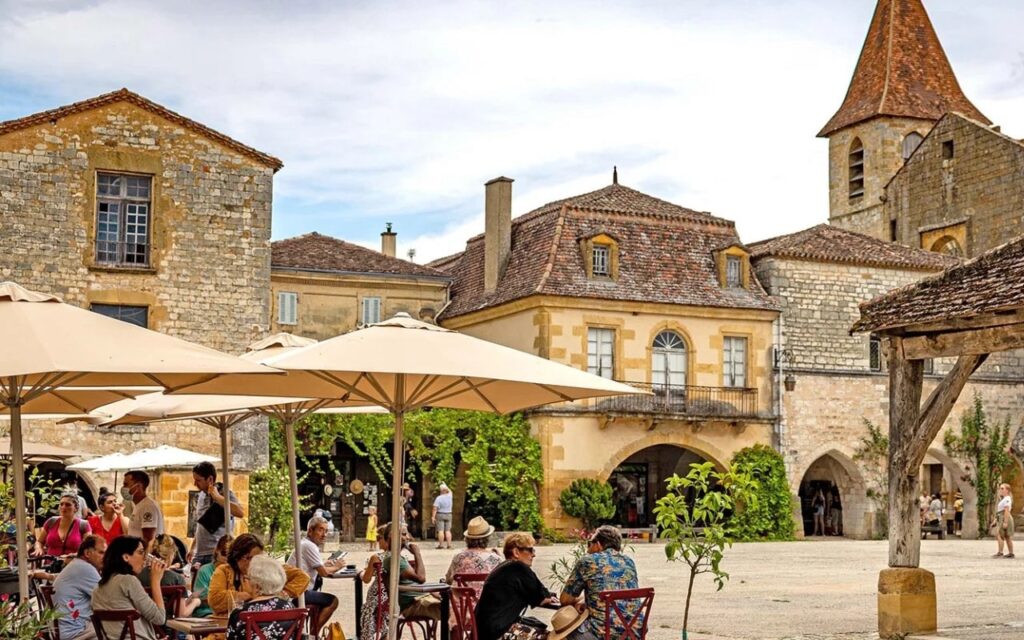
Founded in 1284 by Edward I of England, Monpazier is widely regarded as the best-preserved bastide town in France and is listed among Les Plus Beaux Villages de France. Located in the Dordogne, it’s remained largely unchanged since the Middle Ages, with a perfect grid of streets focused on an arcaded central square with a covered market hall. A Thursday morning market has filled the central square for over 700 years, while 32 of its buildings are protected as historic monuments.
2. Monflanquin
Also listed among Les Plus Beaux Villages de France, Monflanquin crowns a hill in northern Lot-et-Garonne, overlooking the Lède Valley. Founded by the French in 1256, it was fortified from the outset at a time when English and French powers were jostling for control of the region. Today, its arcaded central square still hosts a Thursday market that’s run for some 800 years. The original covered market no longer exists, but you’ll now find a small bastide museum here, along with handsome half-timbered houses and artisan shops.
3. Domme
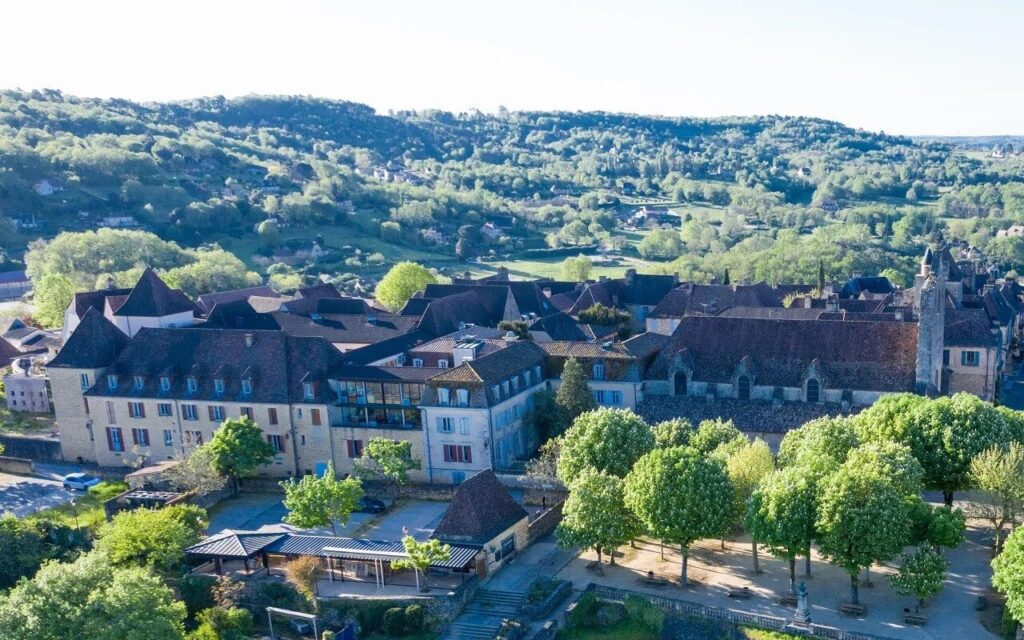
From its hilltop perch above the Dordogne River, the bastide village of Domme offers some of the region’s most striking views. Founded in 1281 on the orders of the French King, Phillip III, it was conceived as a strategic stronghold during the Hundred Years’ War. Its street plan adapts to the clifftop rather than a perfect grid, but imposing ramparts and graffiti from the Knights Templar in the Porte des Tours survive today. Listed among Les Plus Beaux Villages de France, Domme also shelters the Grotte de Domme, a 450-metre cave system filled with stalactites and stalagmites that’s hidden beneath the main square.
4. Eymet
Tucked in a bend of the Dropt River, Eymet was founded in 1270 by Alphonse de Poitiers, Count of Toulouse and brother of Saint Louis, on a site occupied since Roman and prehistoric times. Unusually among bastide towns in France, it incorporates a 13th century castle, whose keep and walls still hint at its defensive role. Around the arcaded Place des Arcades, half-timbered houses, a central fountain, and a lively Thursday morning market create the classic bastide atmosphere, with Sunday and night markets bringing extra buzz during July and August.
5. Beaumont-du-Périgord
Often described as the first royal English bastide, Beaumont-du-Périgord was founded in 1272 for Edward I of England. Much of its double ring of ramparts has disappeared or been incorporated into other buildings, with the Porte de Luzier and Tour de Bannes marking the line of its defences. The covered market hall was demolished in the 19th century, and it’s one of the only bastide towns in France bisected by a main road. Of note are its H-shaped grid layout, said to honour Henry III, and an imposing fortress-church.
6. Libourne
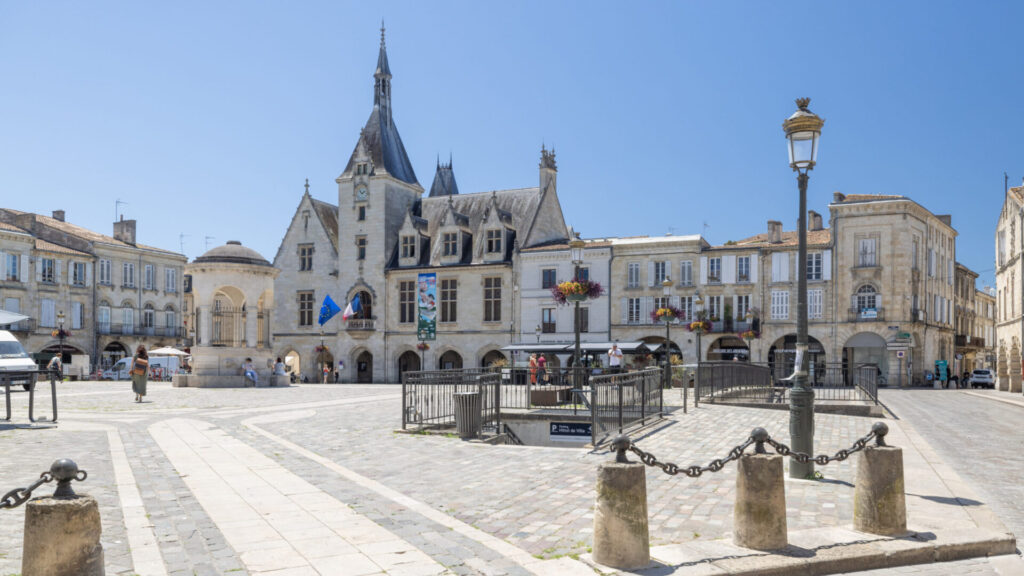
Located between Bordeaux and Saint-Émilion, Libourne is often overlooked in favour of its famous neighbours, yet this 13th-century bastide is a rewarding stop in its own right. Founded in 1270 by the English knight Roger de Leyburn acting for King Henry III, it occupies a strategic position at the confluence of the Dordogne and Isle Rivers. For centuries it served as a key export port for wines and other regional goods, a trading heritage still echoed in its large marketplace, which hums with activity on Tuesdays, Fridays and Sundays.
7. Sauveterre-de-Guyenne
Slightly off the main tourist routes, Sauveterre-de-Guyenne sees fewer visitors than many bastide towns in France, yet is among the best preserved. Founded by King Edward I of England in 1281, it retains its central colonnaded square and characteristic checkerboard streets. Much of its fortifications have gone, but four monumental gateways – Portes Lafon, Saint-Léger, Saint-Romain, and Saubotte – survive as listed monuments, alongside a beautifully restored half-timbered house and the Gothic church of Notre-Dame.
8. Monségur
Located in the Entre-deux-Mers region between the Dordogne and Garonne valleys, Monségur is the only true hilltop bastide in Gironde and still preserves a significant stretch of its original fortifications. Founded in 1265 by Eléonore de Provence, queen consort of Henry III of England, it remains remarkably intact with a central square framed by arcades and straight, grid-like streets. The medieval market hall has been replaced by a 19th-century iron-and-glass hall, where the weekly market is held every Friday.
9. La Bastide-Clairence
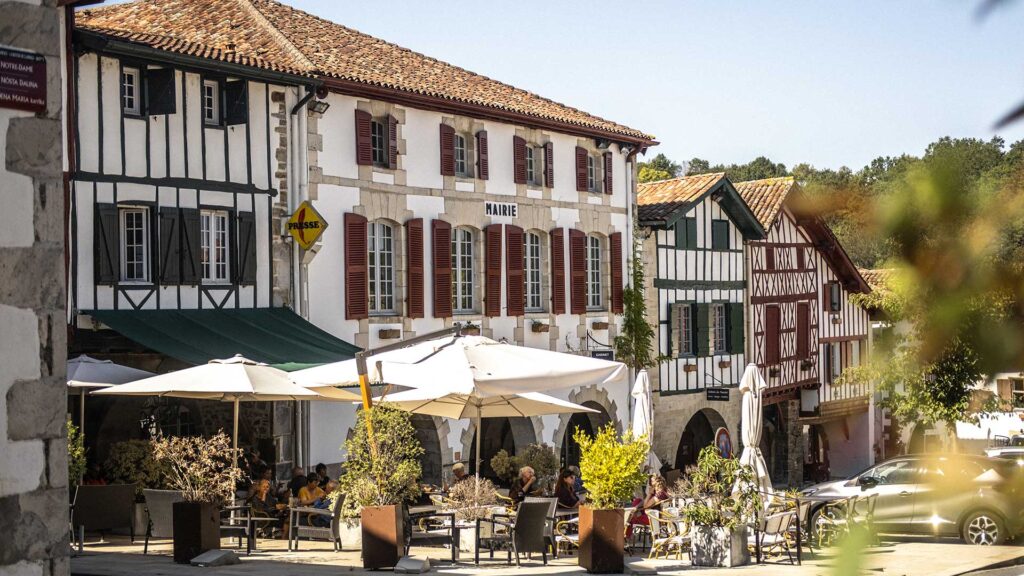
Around 20 kilometres from Bayonne in the French Basque, La Bastide-Clairence is a 14th-century fortified town classed among Les Plus Beaux Villages de France. Founded in 1312 by King Louis I of Navarre, future King Louis X of France, it shows all the hallmarks of a classic bastide – a rectangular square framed by arcades and a checkerboard-style street plan – but the houses are distinctly Basque, with whitewashed facades and vibrant red or green half-timbering. Artisan workshops and a weekly Tuesday morning market add extra life to the Place des Arceaux.
10. Navarrenx
Set on a low bluff above the Gave d’Oloron at the foot of the Pyrenees, Navarrenx, started out as a river fortress before Marguerite, Viscountess of Béarn, granted it bastide status in 1316. In the 16th century, its strategic position led to a complete refortification, creating what’s often cited as France’s first bastioned city, wrapped in thick ramparts and angular bastions. Today, it’s listed among Les Plus Beaux Villages de France, with its fortifications protected as historic monuments. Walk the ramparts and you can still see its bastide origins, while a Wednesday market on the central square keeps the trading tradition alive.
11. Lauzerte
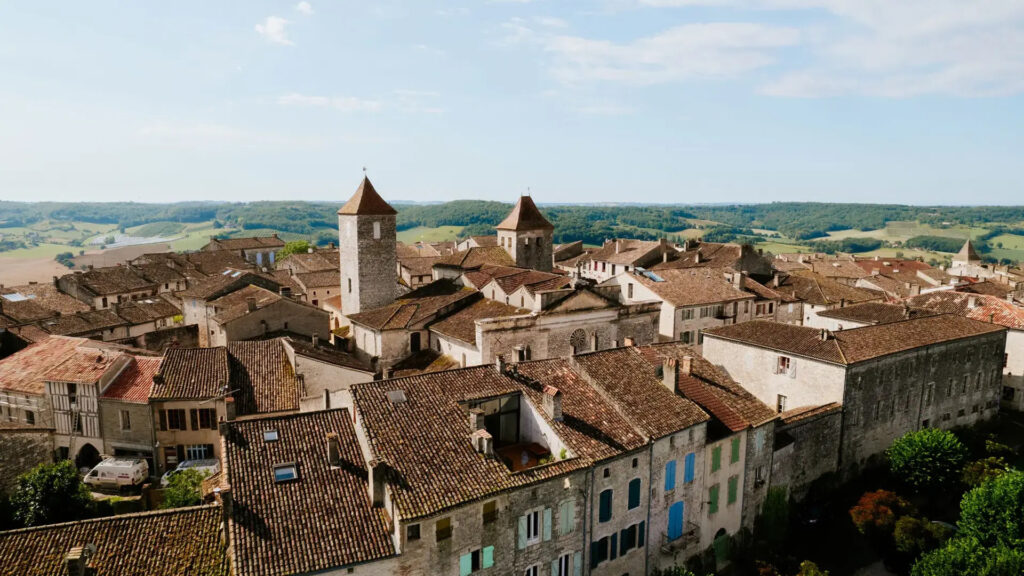
Perched on a rocky promontory in the Quercy Blanc region, Lauzerte boasts commanding views in every direction, and has earned its place among Les Plus Beaux Villages de France. Founded in 1241 by the Count of Toulouse, this bastide town centres on the Place des Cornières, a handsome square edged with stone and half-timbered houses and the church of Saint-Barthélémy. Set on the Chemin de Saint-Jacques du-Puy, one of the pilgrim routes leading to Santiago de Compostela, it also features a beautiful Pilgrim’s Garden and Le Coin Relevé, a playful artwork that seems to lift up a corner of the square’s paving.
Discover Bastide Towns in France with Just Explore
If you’re keen to explore bastide towns in France, we can weave in a visit to some of these medieval wonders as part of a tailor-made itinerary for Bordeaux and the Basque Country.
Simply get in touch with Just Explore, tell us about your interests and budgets, and we’ll recommend the best bastide towns to visit in France for you and craft them into your dream itinerary.
For a broader introduction to this corner of southwest France, you might prefer our small-group tour to Bordeaux and the Basque Country, which also includes the Spanish Basque and the cities of Bilbao and San Sebastian.